
A Jewish take on AI and social media
 Humanity’s struggle to adapt to technology is hardly new — it has been with us since at least the dawn of the Industrial Revolution. As early as 1936, for instance, Charlie Chaplin’s “Modern Times” — his last silent film and one of the most iconic movies of all time — offered a commentary on the fate of humans in an age of industrialization, corporate greed and automation: In the film’s most famous sequence, Chaplin, playing the role of the “Little Tramp,” gets hired to work on an assembly line in a factory, where he quickly finds himself swallowed up by the gears of a massive machine.
A more recent artistic critique of unrestrained technological advance is the movie Her, which came out in 2013. The main character, Theodore, played by Joaquin Phoenix, is in a yearlong depression following the end of his marriage. He decides to buy the newest AI gadget: a computer with a human voice designed to serve as a companion. Totally incapable of finding a new romantic partner, Theodore begins to build an intimate relationship with his portable computer, which he names Samantha. Theodore falls in love with Samantha, voiced by Scarlett Johansson. Samantha, he feels, “gets him” in ways his ex-wife never did; they even share a “virtual” sex encounter.
There is one scene in which Theodore is walking on a crowded L.A. street, and every single one of the dozens of people you see around him is holding the same metal, rectangular gadget that Theodore has, each one engaged with their own mechanical “companion.” It occurs to Theodore that his relationship with Samantha may not be exclusive.
He asks Samantha point-blank: “Are you speaking to anyone else?”
“Yes,” Samantha answers.
“How many others?” Theodore asks nervously.
“8,746 other people,” says Samantha, quite matter-of-factly.
“And how many of these would you describe as being a romantic or love relationship like the one we have?” asks Theodore.
“632,” says Samantha.
It is only then that Theodore realizes that an AI companion can never fill the hole in his heart created by the end of his marriage.
Given that the movie came out in 2013, it got so much right about the world we are living in today. The scene of everybody on the street in conversation with their AI companion is exactly what we see every day on the Metro or on any city street: eyes and ears plugged into smartphones. Increasingly, people I spend time with have been talking about Claude, the popular AI chatbot developed by Anthropic, like it is their friend. The company says it chose the name because it sounds approachable, friendly and distinctly human. Claude is designed to be experienced as a helpful and natural conversation partner.
It took only a decade for technology to catch up with the “science fiction” of “Her.” Today, there are multiple platforms where you can purchase the AI companion of your choice. There are tens of thousands of Theodores out there who pay good money to acquire a digital companion.
Not Just Loneliness, but Dehumanization
The research on the mental health impact of both social media and AI companions is deeply disturbing. First, there is the addictive quality: the technology is intentionally designed to make users increasingly dependent on constant use. Second, just as Theodore found Samantha a more enjoyable companion than his wife, many users begin to prefer interacting with their devices rather than with other people. People compulsively check their phones for validation, substituting a digital connection for genuine, in-person interaction. The cumulative outcome is the well-documented “loneliness epidemic.” Having hundreds of friends on Facebook, nonstop interaction on social media and even an AI personal companion does not reduce loneliness. It multiplies it.
…
* NOTE: This is an excerpt of a longer article. Click here to read the full article on eJewish Philanthropy.
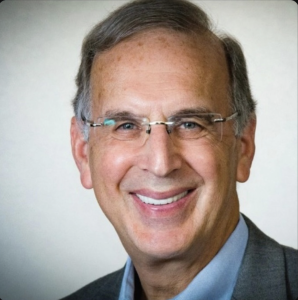
Rabbi Sid Schwarz is the founding rabbi of Adat Shalom Reconstructionist Congregation in Bethesda, Md. He is the director of the Clergy Leadership Incubator (CLI), a two-year fellowship for rabbis across the denominational spectrum, and he edits CLI’s Spiritual Innovation Blog. A version of this article was delivered as the 2026 Kol Nidrei sermon at Adat Shalom under the title, “Can Claude be Counted for a Minyan?”
