 Rabbi Neil F. Blumofe is the Senior Rabbi of Congregation Agudas Achim in Austin, Texas. He holds Rabbinic Ordination from both the Jewish Theological Seminary (JTS) in New York and the Academy for Jewish Religion in Los Angeles. Neil is active in the greater Austin music community — producing and performing the monthly “Jazz and the Art of” series for the public radio station (KUT). His weekly Liner Notes on various jazz artists can be heard on the radio in Austin every Sunday morning and is distributed across the country. He is on faculty at St. Edwards University, teaching in both Jewish Studies and Jazz Studies. Blumofe has been a Rabbis Without Borders fellow in New York, is a member of the Institute for Jewish Spirituality, and is a member of the upcoming Rabbinic Leadership Institute at the Hartman Institute in Jerusalem (2013-2016). He is also an active Crossfitter.
Vision | “Leadership comes with the discipline of patience and generosity. Character is forged not only in the public workshops of performance – rather more significantly in the small ways of rendering goodness. Like a soloist in a jazz ensemble, playing beautifully and technically inspires others to improvise in turn and to trust from the charts of their personal experience. I believe in learning and growing from our learning and to know and appreciate the gifts and the limitations that we have. I view the synagogue as a sacred laboratory and to share vision, sweat, and possibility with those invested in its existence and improvement.”
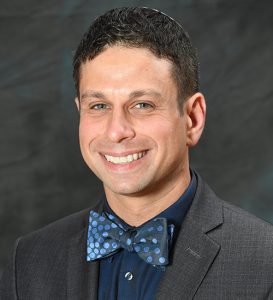 Rabbi Daniel Cotzin Burg is the Alexander Grass Rabbinic Chair of Beth Am Synagogue in Baltimore, MD, where he’s been since 2010. He was ordained by the Ziegler School of Rabbinic Studies in 2005. His writing has appeared in The Washington Post, The Baltimore Sun, the Jewish Review of Books, The Forward and more. For six years, he’s penned the Baltimore Justice column for www.jmoreliving.com which he cross-publishes to his blog at www.theUrbanRabbi.org. Rabbi Burg has helped to articulate a congregational mission and vision for Beth Am’s community engagement initiative “In, For Of, Inc.” a 501(c)3 organization affiliated with Beth Am under the framework of Tzedek Beth Am. He serves on the boards of the Elijah Cummings Youth Program and the Maryland Zoo in Baltimore. He has been a vocal supporter in Annapolis and Baltimore of marriage equality, police reform, environmental justice, legislation to curtail gun violence and other important social and societal issues affecting Beth Am’s city and state. Daniel lives near Beth Am in the historic Reservoir Hill neighborhood with his wife, Rabbi Miriam Cotzin Burg, and their teenage children, Eliyah and Shamir.
Vision | I believe rabbis should be attentive to place and time. Beth Am is a 48-year-old shul in a 100-year-old synagogue building. We sit at the nexus of history and geography, a vibrant and growing Jewish community in an historically Jewish, majority Black neighborhood. Moving to Reservoir Hill with my family, leading a congregation rooted in Central-West Baltimore, means doing social justice on our front doorstep, within our walls, and around our neighborhood. For me, the rabbinate is fundamentally relational. Ideas must be refracted through the lens of lived Jewish experiences and meaningful human connection. My Torah is applied Torah. My community is a laboratory of encounter. My synagogue aspires to be an effective anchor, blending constituencies and concerns. All this being true, I do not believe in a Torah rooted only in tikkun olam. Tzedek, like all worthy Jewish endeavors, must grow from the rich soil of Torah learning. In that sense, rabbis are teachers, bearers of tradition and prophets for a living God.
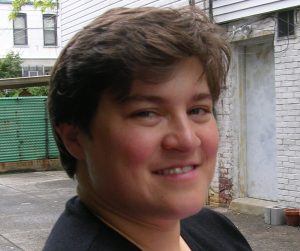 Rabbi Carie Carter has served as the rabbi at the Park Slope Jewish Center since 2000. Both she and the synagogue have been on the cutting edge in advancing LGBTQ inclusion in the Conservative movement. Following her ordination at JTS, Carie served as the director of Cleveland Metro Hillel, overseeing several campuses in the greater Cleveland area. Inspired by her work in Hillel and as an educator in pluralistic summer camps and youth movements, Carie is deeply committed to helping people engage with Judaism in their own way, recognizing that “there are many roads to the palace” of Jewish living. She was in the inaugural cohort of NY UJA’s Rabbinic Fellowship for Visionary Leadership and has also studied with the Mussar Institute. She played a central role in establishing the IsraelBrooklyn Shlichut Initiative in conjunction with the Jewish Agency and the New York Jewish Federation, connecting Brooklyn Jews not only to Israel, but to one another. Her volunteer work has included Habitat for Humanity, the Human Rights Campaign and T’ruah. She lives in Park Slope with her wife Eden and daughter Noa.
Vision | In a world of individualism and isolation, I, as a rabbi, am committed to creating community: physical and spiritual spaces where each person who enters can bring their authentic selves; where people can be accepted, celebrated and valued as they are; and where striving, honesty and humility guide our actions and our interactions with one another. From this safe place, I help people work together to dedicate time, energy and passion to creating a broader community where no one feels threatened by another; a community where Torah and Jewish wisdom, in its broadest sense, can be a guiding force inspiring us to seek justice and to create lives of connection and meaning for one another.
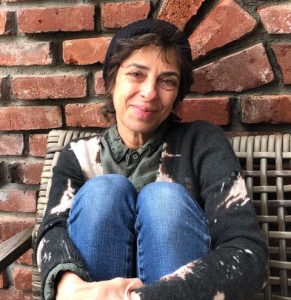 Rabbi Hannah Dresner, MFA, is the rabbi of Or Shalom, a Jewish Renewal community of 300 households in Vancouver, BC. Ordained as rabbi through the Aleph Alliance for Jewish Renewal in the last cohort given smicha by Reb Zalman Schacter-Shalomi, she has also received ALEPH ordinations in Spiritual Direction and as a Dayan, tasked to consider contemporary halachic questions from a paradigm-shifted perspective. Hannah served as the first female and first Jewish Renewal chair of the Vancouver Vaad of rabbis. She is an Institute for Jewish Spirituality Hevraya Fellow and is an alumnus of CLI-Cohort 2. She comes to the rabbinate after an active exhibition career as a visual artist, having piloted interdisciplinary curricula across the arts at Northwestern University and having worked as Curator of Education for the Spertus Museum of Judaica in Chicago. A painter, cook and avid singer, Hannah approaches her rabbinate as an aspect of her artistic expression. Her writing is archived at My Jewish Learning and on the Or Shalom website.
Vision | I see it as my calling to present Judaism so that it speaks to the human heart, as a set of resources relevant to our human needs in each present moment. I find it helpful to extend invitations to both members and to the seekers who come our way to live individual moments–and then a growing string of moments–through a Jewish lens, applying the rhythm of our weeks and seasons, insights from our sacred literature, and ritual engagement to shape and process life, in all its messiness. My goal is to lead from within a conscious community of spiritual friends. The core of the spiritual community that I lead resides in spirited davening niggun practice, chant, and meditation. Around this core, multiple portals are opened by concerts, story and poetry slams, movement, bet midrash tracks that explore the weekly parsha, gemara, Hasidic and esoteric texts, arts practice, engagements of children and their parents, seekers of identity, and Queer community. Supporting all, are structures of gemilut chesed and tikkun olam, continually evaluated and adapted to answer arising needs, both in the lives of individual community members and in the life of the community outside our window.
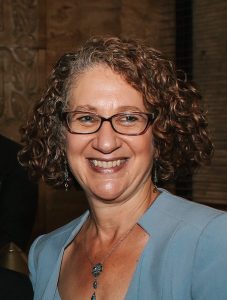 Rabbi Serena Eisenberg is the Director of Regional Engagement at American Jewish Committee (AJC), following five years as the Director of AJC’s Northern California region. She served as the President of the Northern California Board of Rabbis and worked for Jewish congregations and organizations in the Bay Area for over 25 years. Previously Eisenberg was the Executive Director of Hillels at Stanford University and Brown University. She is a member of the rabbinical professional associations of both the Reform and Reconstructionist movements. Serena is an alumnus of several fellowships, including: Wexner Graduate Fellowship; Mandel Jerusalem Fellows; CLAL Rabbis without Borders; the Institute for Jewish Spirituality; Chautauqua Interfaith Clergy; and AJWS Global Justice Rabbis. She currently serves as a mentor for the Executive Leadership program of the Mandel Institute for Non-Profit Leadership. Before entering the rabbinate, she received a JD/MSW from UC Berkeley and a B.A. from Brown University and worked for a decade as child-welfare advocate in the Bronx, Oakland, and in West Africa. Serena is married and blessed with five sons and several adorable grandchildren.
Vision | My vision is to live fully present in each moment and help to nurture the growth and flourishing of others. As we navigate complex family and community systems amidst a dizzying pace of change, I am guided by the playful, creative, bold, and urgent optimism of design thinking. Jewish leadership for me is “an improvisational art,” for building – together – sacred organizational structures, with caring culture built on a sturdy foundation of interdependence. I see leadership as the active intention to draw out and activate others, to seek opportunities for each person’s strengths and unique spirit to shine on the diverse platforms of Jewish life. I find particular joy orchestrating the mash ups at the boundaries of Jewish peoplehood, as an ambassador and bridge-builder with other faiths and cultures, as a convener and facilitator for greater understanding in the world.
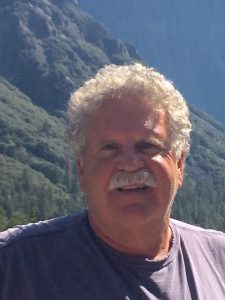
Rabbi Jeffrey Eisenstat is the founding director of the Reconstructionist Camp JRF (now Camp Havaya) and the movement’s youth program, Noar Hadash. In over 40 years as a rabbi, he has served congregations in Plantation, FL, Philadelphia and State College, PA, directed Hillel at Penn State and has run summer camps, youth programs, family retreats and family trips to Israel. He received his MA in Education from Temple University and is a 1976 graduate of the Reconstructionist Rabbinical College. At RRC, Jeff has taught courses for Rabbi as Educator, Merging Formal and Informal Jewish Learning and Transformative Text Experiences. He has served as a faculty member of the JCCAssociation and as a mentor for the Lekhu Lakhem camp director program. Among his writings are studies in creating family davening experiences and the values of spiritual peoplehood. He has also made some musical recordings. Jeff is married to Rabbi Sarah Messinger. Together, they co-created Congregation Shireinu in Bryn Mawr, PA., where they use their experiential skills in creative prayer and programs.
Vision | According to Rav Kook, each of us has a song in our soul. My song is leading the Jewish people in education, from formal to experiential, from early childhood to our honored elders. I can sing inside a classroom or out in nature and I help others find their Jewish voice. These melodies can burst forth from the bimah with young or old in celebration, or it can be the whisper of a psalm at graveside. But the most important symphony comes when I act as conductor in creating “intentional holy community”.
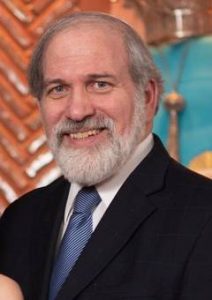 Rabbi Lyle Fishman served as rabbi of Ohr Kodesh Congregation in Chevy Chase, MD from 1984 until his retirement in July 2021. Following undergraduate work at Yale University and the Hebrew University, he prepared for the rabbinate at the Jewish Theological Seminary, where he also taught Hebrew language. Emphasizing the centrality of the study of Jewish texts, he taught extensively within the congregation and in several Washington community settings. Within the congregation he formed a Chesed Committee to respond to the needs of recuperating and/or isolated members. He also strengthened the Funeral Practices Committee which responded to all the needs of bereaved families from the moment of death through the periods of bereavement. In retirement he continues to teach two weekly text classes at Ohr Kodesh and offers adult classes in the community. He has co-taught a seminar in Jewish Law at Georgetown Law Center since 2015. He was valedictorian of the second cohort of the Shalom Hartman Institute’s Rabbinic Leadership Program. He and his spouse, Debra Rosenman, are blessed to be the saba and savta of six grandchildren who reside in suburban Maryland and Bergen County, New Jersey.
Vision | Ideally rabbinic leaders commit themselves to building engaged Jewish communities through the instrumentalities of Torah, avodah and acts of chesed. To me, these approaches represent the on-ramps for the Jews whom we serve. When we study Torah ourselves and teach it to our community members, we access the theory of Judaism. Through avodah and acts of chesed we put that theory into practice vis-a-vis GOD and other human beings. While we often lead, we also facilitate the harmonious integration of our members into the symphony orchestra that becomes our community. When we are attuned to our constituents, we can blend their needs and abilities to create a joyous song to GOD and a caring, inclusive setting which reflects the best features of a loving, devoted family.
 Rabbi Laura Geller is Rabbi Emerita of Temple Emanuel of Beverly Hills. She was one of the first women to be selected to lead a major metropolitan synagogue, was twice named one of Newsweek’s 50 Most Influential Rabbis in America and was featured in the PBS documentary “Jewish Americans.” Ordained by Hebrew Union College in 1976, she is the third woman in the Reform Movement to become a rabbi. She is a Fellow of the Corporation of Brown University from where she graduated in 1971. She serves on the boards of Encore.org and the Jewish Women’s Archive. Prior to coming to Temple Emanuel she served as the Hillel Director at USC for 14 years and then as the regional director of the American Jewish Congress. Along with her late husband Richard Siegel, she is the co-author of Getting Good at Getting Older (2019). She is the co-founder of ChaiVillageLA.org and the chair of the Synagogue Village Network.
Vision | “My role is to be translator, teacher, guide, nudge, connector and leader. As translator and teacher, I try to make these Jewish tools accessible through teaching, writing, facilitating prayer experience and the example of how I live my own life. As guide, I am present to individuals and families at important moments of celebration and loss through creative engagement with ritual and prayer. As nudge, I am relentless in my intention to empower others to take responsibility for their Jewish lives and the life of our community. As connector, I facilitate relationships among people and among diverse communities. As leader, I try to be bold about articulating, advocating and organizing in the Jewish community, in Israel, and in the larger world to move us a little closer to a vision of a world redeemed.”
 Rabbi Elyse Goldstein served for twenty years as the Director of Kolel: The Adult Centre for Liberal Jewish Learning which she founded in Toronto. She is currently the Founding Rabbi of City Shul, an out-of-the-box new Reform congregation in downtown Toronto. She was ordained from Hebrew Union College in 1983, and served as Canada’s only female rabbi for the first three years of her rabbinate. She is one of seven women featured in the Canadian National Film Board documentary, “Half the Kingdom.” She is the author of ReVisions: Seeing Torah through a Feminist Lens and Seek Her Out. Elyse is also the editor of The Women’s Torah Commentary, The Women’s Haftarah Commentary and New Jewish Feminism: Probing the Past, Forging the Future. She is the 2005 recipient of the Covenant Award for Exceptional Jewish Educators. Elyse loves spinning, skiing (both downhill and cross-country) and singing her heart out. She is a devoted foodie, fast-paced traveler (having taken her kids out of school for 6 months to travel around the world) and family-lover of husband Baruch and sons Noam, Carmi-Yonah, and Micah.
Vision | I have wanted to be a rabbi since my Bat Mitzvah at age 13— though I had never seen a woman on the bima. Being a rabbi is to grab hold of the rich and meaningful chain of Jewish tradition, wind it around in new and thought-provoking ways and help people take a hold of whatever link lands near their heart. To be a liberal rabbi in this century is the deep but motivating paradox of being an agent of change with a reverence for an unchanging text and a slowly-changing tradition. I still believe that the synagogue is the best place to do that; a place where it is safe to wrestle with the angels both within and without.
Rabbi Salomon Gruenwald is Senior Rabbi of Congregation HEA in Denver, Colorado. Salomon served as President of the Rocky Mountain Rabbis and Cantors Council from 2018 to 2022 and he is a member of Governor Jared Polis’ interfaith clergy council. He is an alumnus of the first CLI cohort, as well as Rabbis Without Borders and the Institute for Jewish Spirituality. He earned a B.A. in Social Sciences from UC Irvine, an M.A. in Cultural Anthropology and Women’s Studies from UC Santa Barbara, and rabbinic ordination in 2008 from the Ziegler School of Rabbinic Studies. Salomon was raised in southern California and is the son of immigrants from Peru. He and his wife, Melanie, have three children: Hannah, Micah, and Koby (of blessed memory). Salomon snowboards and cycles. He and his family are very active in the annual Courage Classic cycling event to support the Center for Cancer and Blood Disorders at Children’s Hospital Colorado.
Vision | My personal mission as a rabbi is to help people flourish through the wisdom and practices of Judaism. My rabbinate and community leadership are driven by a belief that the Jewish tradition is an enduring source of wisdom that can help us live deeper lives, connect with others, and improve the world. Having lost a child to cancer, I believe my work is to help people hold the tensions and paradoxes of life – the ability to experience joy and sorrow with the same heart. In this post-pandemic world, I believe that religion can play an important role in healing our individual souls and the ideological differences that divide our world. Religion in the 21st century must commit to a spirit of service to others and the common good. Our spiritual practices – such as communal prayer – can cultivate in us empathy so that we can connect with other people with grace and kindness. By modelling warm, inclusive and safe spaces, spiritual communities can be incubators for the habits and dispositions of citizenship and promote the practices of a democratic, humanistic society.
 Rabbi Rachel Gurevitz serves Congregation B’nai Shalom in Westborough, MA. A graduate of the CLAL student program, and the first cohort of the Rabbis Without Borders Fellowship, Rabbi Gurevitz became Rabbi of CBS in 2012 after six years as the Associate Rabbi of Congregation B’nai Israel, Bridgeport, CT, where she was a founder of an interfaith Tent of Abraham program and served for several summers with the management team of Elat Chayim. Growing up in a Modern Orthodox community in the suburbs of London and transitioning to a Reform community and Jewish Renewal chavurah during her college years, Rachel studied for the rabbinate at Leo Baeck College, London and Hebrew Union College, NY and a Ph.D in Cultural Geography (Sociology) at University College London. Rabbi Gurevitz is married to Rabbi Suri Krieger (AJR, NY, 2009) and they have four adult step-children.
Vision | “As a rabbi who seeks to understand and serve my community and bring Jewish wisdom into the context of their everyday lives, I bring the outside world into my teaching and provide bridges for congregants to navigate the different parts of their lives. I have a love of Jewish mysticism and spiritual practice and bring creative, experiential prayer into a mainstream, Reform congregation in ways that open people to trying new things. I am passionate about interfaith work and making our congregation more actively present in the wider community. I work as a partner with my lay leadership, shaping the identity and values of the congregation together, and seeking to make it more of a model of the values and sacred community that we all aspire to be.”
 Rabbi Corey Helfand is the senior rabbi of Ohr Kodesh Congregation in Chevy Chase, MD. He previously served as the senior rabbi at Peninsula Sinai Congregation in the Bay Area. Corey was ordained by the Jewish Theological Seminary in 2011. He also received a Master’s degree from JTS in Talmud and Jewish law with a certificate in pastoral care. He was a recipient of the prestigious Gladstein Fellowship and studied entrepreneurship rabbinics, with an emphasis on visioning and community building. Corey is also an alumnus of CLI-Cohort 2. Corey enjoys all things outdoors, including watching and playing sports. A Midwest native, Corey is a diehard Kansas City sports fan. He is married to Jenny Ackerman, a medical/palliative care social worker, and together they have three children: Eden Leora, Matan Judah, and Jonah Gavriel.
Vision | At the heart of my rabbinic vision is the belief that each person is on their own personal derech, a pathway for making Judaism and Jewish identity a meaningful and spiritually fulfilling part of their lives. I celebrate and hold sacred the idea that everyone is making this journey, at their own pace, and toward their own destination. Through creating personal and proximate relationships, the power of pastoral presence, and leading with deep compassion and empathy, my rabbinate is about showing up for others, in a non-judgmental way, on their derech. There are times where this requires listening and compassion. There are other moments when it is necessary to ask hard questions to begin a path toward adaptive change and thoughtful solutions. My rabbinate has taught me the importance of joining someone wherever they are on their path, as they set the pace, using our sacred tradition as a vehicle for more purposeful and intentional change and living.
 Rabbi Karyn Kedar was ordained from HUC-JIR in 1985. She was among the first generation of women rabbis and, after making aliyah, the first woman rabbi to serve in Jerusalem. After returning to the States, she was the Great Lakes Regional Director for the Union for Reform Judaism serving congregations across five states and became a part of the Synagogue 2000 team, developing an expertise in crisis management, synagogue innovation, inspirational leadership models, and fundraising. As Senior Rabbi of Congregation B’nai Jehoshua Beth Elohim (BJBE) in Deerfield, Illinois, Karyn guided the declining congregation to reimagine itself, inspired by the mission to provide avenues where people could discover the meaning and purpose of their lives. The congregation embarked on an ambitious building project which reinvigorated the membership and resulted in an award-winning facility whose unique and innovative architectural features speak the language of the congregation’s vision and values, both in the flow and design. In 2022 Karyn became the Rabbi Emerita. Rabbi Kedar was named “Woman to Watch” by Jewish Women International. She studied at Beit Midrash ELUL in Jerusalem, participated in the Clergy Leadership Program of the Institute for Jewish Spirituality (IJS) and is a trained spiritual director from Bechol Levavcha. Karyn has enjoyed her role as a mentor for HUC-JIR rabbinic students, both in Israel and the States. She has also mentored rabbinic students for the AIPAC Leffell Israel Fellowship program, and the HUC-JIR Tisch/Star Fellows Program. Karyn is an author and a poet, writing in the genres of creative nonfiction, poetry and liturgical poetry. She has published several books and is a frequent contributor to many anthologies.
Vision | I am a creative entrepreneur who is dedicated to creativity, innovation, writing and spiritual curiosity. I believe in service above self and that we are all called to manifest the beauty within ourselves. Every morning that we are granted another day of life, we are invited to the miracle of awakening. Come to the edge of what you know and sit awhile. Find the courage to live fearlessly; to emerge and unfold; to create a life of meaning and purpose.
 Rabbi Adam Kligfeld is the Senior Rabbi of Temple Beth Am, in Los Angeles, CA. A graduate of Columbia University, with a degree in Jewish History and Psychology, Adam was ordained by JTS. He participated in leadership training through STAR (Synagogues: Transformation and Renewal), as well as at the Hartman Institute in Jerusalem as a member of the 5th cohort the Rabbinic Leadership Initiative. Adam’s transformation of the prayer life at Beth Am has led to the hosting of two national conferences called Kol Tefilah, focusing on the many ways that music, song, harmony, niggun, meditation and spiritual uplift can transform a congregation’s approach to tefillah. (https://ejewishphilanthropy.com/re-imagining-synagogue-worship/). He recently completed a sabbatical focusing on meditation and mindfulness, as well a deep dive into Hasidic mysticism. Adam is an avid biker, an even more-avid Yankee fan. He is married to Havi Kligfeld and father to Noa, Ayden and Lev.
Vision | I try to promote a religious life that is filled with meaningful rituals that inspire more ethical living. When you pray, it should both energize you and ground you. A life touched by the divine spirit should push you, agitate you and challenge you about the state of the world; but it should also offer comfort and relieve you from what is hard in life. I see paradoxes all around us, and my personal relationships, religious life and rabbinic purpose all push me to live within those paradoxes. I try to grasp hold of life’s complexities with honesty, a willingness to be vulnerable, and a striving to be close: to God, to others, and to my truest self.
 Rabbi Chaim Koritzinsky is the rabbi of Congregation Etz Chayim, an independent community in Palo Alto, California where he has served since 2015. Previously, he was the founding rabbi for a start-up congregation in Santiago, Chile known as Ruaj Ami. Chaim currently serves as the rabbinic co-chair for the Shalom Bayit Rabbinic Advisory Council which is the San Francisco’s Jewish response to Domestic Violence. He is also a part of Shalom Bayit’s “Mensch Up” advisory team. Chaim was in the inaugural class of the Hebrew College Rabbinical School in Boston in 2008. While in Boston, he helped launch the Men’s Initiative at the Mayyim Hayyim Living Waters mikveh and education center as well as Dance Midrash Boston, a group that explores exegesis through movement. Prior to rabbinical school, Chaim helped rebuild Jewish life in the Former Soviet Union through his work with the Joint Distribution Committee, Hillel, the Jewish Agency and Netzer Olami. He also studied at Pardes in Jerusalem for two formative years. Chaim is an alumnus of the CLI-3 cohort and is honored to return as a mentor. With his wife Keren, they are the proud parents of three children – Yaniv, Noam, and Lielle.
Vision | The Vilna Gaon reminds us that we have two ears but only one mouth. My rabbinate begins with listening. Each voice is critical and deserves to be heard. Listening is what makes pluralism flourish. If we can’t listen to one another, then we can’t engage in honest dialogue. Listening is what made Hillel such an effective rabbi and leader. Listening humbles me, reminding me that others see and experience the world in different ways than I might. As it says in Proverbs (11:2), “Humility leads to wisdom”. The wisdom generated from humility fuels my rabbinate and my mission to build and strengthen concentric circles of community. Singing is also an important part of my rabbinic tool kit. Singing reminds me of the unique value of each voice in the sacred choir. When we sing with our one mouth, we listen with our two ears to those who surround us. We can then transform ourselves from isolated individuals into an angelic choir that can nurture, sustain, and elevate each one of us to be our best selves and effective leaders.
 Rabbi Marc Margolius is Senior Programs Director at the Institute for Jewish Spirituality, a center for training rabbis, cantors, educators and lay leaders in Jewish mindfulness practice and transforming Jewish life. At IJS, Rabbi Margolius directs the Institute’s Kivvun program for lay leaders, Hevraya program for clergy, and Tikkun Middot Project, which integrates Jewish mindfulness with middot practice. He previously served as rabbi at West End Synagogue, a Reconstructionist Congregation on Manhattan’s Upper West Side, and conceived and directed the Legacy Heritage Innovation Project, an initiative supporting systemic educational transformation in congregations across North America, Europe and Israel. As spiritual leader of Congregation Beth Am Israel in Penn Valley PA from 1989-2002, Marc helped develop a national model of the synagogue as a Shabbat-centered community constructed around intergenerational learning. He was ordained at the Reconstructionist Rabbinical College (1989). A graduate of Yale Law School, he has long been active in interfaith matters and social justice issues. He lives in New York with his wife Rabbi Ayelet Cohen and has five children.
Vision | As a rabbi, I seek to support Jews in discovering deep resonance between their personal experience and Jewish resources and spiritual practices and help them experience Jewishness as a central aspect of renewing themselves and this world. I have particular interest in exploring Jewish tradition through the lens of mindfulness and how that supports Judaism as a practice of ongoing transformation. I am committed to a systemic model of Jewish spiritual community that embraces diversity as a manifestation of unity, organically integrates all facets of Jewish living and supports ongoing individual and collective transformation.
 Rabbi Bennett Miller graduated from the University of Cincinnati and was ordained at HUC-JIR in 1974. He earned his D.Min from Princeton Theological Seminary in 1988 and earned a certificate in Non-Profit Management and Fund Raising from New York University in 2008. For 44 years, Bennett served as Senior Rabbi of Anshe Emeth Memorial Temple in New Brunswick, NJ. In 2019-20, Bennett served as Interim Senior Rabbi of Temple Emanu-El in Westfield, NJ. Bennett also serves as national chair of ARZA. He is founding chair of the Clinical Pastoral Education Department at Robert Wood Johnson University Hospital and served as Instructor in Pastoral Theology in the Doctor of Ministry Program at HUC-JIR for twenty years. Bennett and his wife, Joan are parents of Rabbi Ellie Miller and Carrie Nussbaum and are proud grandparents of Sam, Max, Meg, Jack, Gabriel, and Benjamin.
Vision | Torah, the wisdom of the Rabbis and the extraordinary narrative of the Jewish people in its encounter with the Divine, have shaped my life. I grapple with making sense out of a world of chaos, seeing sacred when others view mundane and recognize that the rabbinate is a calling to shape and guide the lives of individuals and communities. I teach the integration of Torah, of our sages, together with the finest learning of western civilization. As rabbis, authority comes from synthesizing generations of discovery along with all that the great thinkers have brought to our world. Today’s rabbi must be equipped with the deepest of personal, spiritual, and theological development in order to respond to the challenges of our time.
 Rabbi Barbara Penzner has served as kol-bo rabbi at Temple Hillel B’nai Torah in Boston since 1995. She was President of the Reconstructionist Rabbinical Association and President of the Massachusetts Board of Rabbis. Currently, she co-chairs the Jewish Labor Committee-New England and leads its annual Labor Seder. She was a founding board member of Mayyim Hayyim Mikveh in Newton. Barbara’s spiritual life is shaped by the Institute for Jewish Spirituality, she studies Torah with the Shalom Hartman Institute and has developed her leadership through Bend the Arc’s Selah network of Jewish social justice activists. In 2011, Rabbis for Human Rights (now T’ruah) named her a Rabbinic Human Rights Hero for her advocacy for workers’ rights. She is married to Brian Rosman, with whom she shares her love of Bruce Springsteen and the Red Sox. They are the proud parents of Aviva and Yonah.
Vision | The prophet Micah inspires me every day, to “do justice, act with love, and walk humbly with….” That is, Jewish life encompasses working for justice and is sustained by spiritual practice. Justice and practice are held together through building loving relationships. As a congregational leader, my primary vehicle is one-to-one relationship building, between me and congregants of all ages, and among congregants. Relationships are the foundation for a strong, supportive, and welcoming community. Tikkun olam and spiritual practice depend on and enhance one another. I believe that a community that strengthens individual’s practice, whether through prayer, study, mind-body work, meditation, or mussar, will become motivated to care about others and to act to bring justice to our community and our world. A community of activists must be sustained by practices that cultivate a sense of one’s place in the world (humility and gratitude) and that inspire perseverance and hope.
 Rabbi Francine Roston is a co-founder and rabbi of the Glacier Jewish Community/B’nai Shalom which serves the Jewish community of the Flathead Valley in northwest Montana. She is co-founder and leader of a local Interfaith Clergy group, a member of the local human rights group, Love Lives Here. She is also a regular volunteer for Habitat for Humanity of the Flathead Valley and Farm Hands/Nourish the Flathead—providing local, nutritious food to school backpack programs and coordinating the double-SNAP program at local farmers’ markets. From 2005 to 2014, Francine served as the spiritual leader of Congregation Beth El in South Orange, New Jersey when she made news for breaking the “stained glass ceiling” as she became the first woman to lead a Conservative congregation larger than 500 member units. During her tenure, Francine engaged the congregation in innovative learning programs, revitalization of Shabbat worship, building a communal chevra kadisha, and developing a welcoming, diverse congregation. Previously she served six years as the solo rabbi of Congregation Beth Tikvah in New Milford, New Jersey. Her first rabbinic position was as an assistant rabbi at a large, suburban New Jersey congregation. She was ordained at JTS in 1998 after receiving her BA in Near Eastern and Judaic Studies at Brandeis University. She is a teacher of the Community Resiliency Model®, helping to create “trauma-informed” and “resiliency-focused” communities.
Vision |I am an independent rabbi. Since I was a little girl, I wanted to be a rabbi so that I could welcome people into a Jewish practice that was inspiring and meaningful. I am called to promote the creation of healthy, vibrant Jewish communities, Jewish families and Jewish homes. We do not live in the shtetl, however; we live in a large, diverse world and we must continually build bridges to create mutual understanding, respect and care. I strive to be a wise, compassionate guide to my congregation so that together we can create a welcoming, egalitarian, compelling community and be good citizens of the world. Last, I love rabbis. Whenever I have an opportunity to say Kaddish d’Rabbanan, I recite it in honor of my teachers and colleagues. I pray that our sacred work feeds us and that we are able to find healing of body and spirit as we lead with our hearts.
 Rabbi Amy Schwartzman was born and raised in Philadelphia and she graduated from the University of Pennsylvania with a degree in Religious Studies. She attended HUC-JIR in New York and was ordained in 1990. Immediately after ordination, she joined the clergy team at Temple Rodef Shalom (TRS) in Falls Church, VA as their first assistant rabbi. In 1998 Rabbi Schwartzman became the senior rabbi of the congregation. With over 1800 families, TRS is the largest Jewish congregation in the State of Virginia and one of the largest congregations headed by a woman in the United States. Amy has served on the boards of YACHAD, Religious Coalition for Reproductive Rights, Old Dominion Psychiatric Hospital, and Fairfax County’s Committee to End Domestic Violence. She has also held numerous leadership positions in the Reform Movement’s organizations including the CCAR, URJ, HUC and the Women’s Rabbinic Network. Amy has been published in the Washington Post, Washington Jewish Week, Forward and several books published by the CCAR. She was named one of the Forward’s 50 most influential rabbis in 2007 and Jewish Women International’s ‘Women to Watch’ in 2005. Amy lives in Mclean, VA with her environmentalist husband, Kevin Moss. They are the proud parents of two adult daughters, Hannah and Eliana.
Vision | Judaism provides a foundation of meaning, relevance, joy and inspiration to individuals, families and communities. Each ritual, each tradition, each prayer, each text holds within it values that can guide our lives directing our actions towards that which is holy and just. The chance to bring this wisdom to others and help them find meaning for themselves is a gift and a responsibility. While connecting with tradition sits at the center of my daily work, connecting with people and helping them find their own moments of meaning sits at the center of my heart. At our best, rabbis are facilitators, guides, and translators who enable others to discover a Judaism that enriches and transforms their lives. I believe Judaism can respond to the uniqueness of each individual as well as to the ever-changing landscape of our world.

Rabbi Hyim Shafner is the rabbi of Kesher Israel in the Georgetown section of Washington D.C. Prior to that post, he served as the rabbi of Bais Abraham Congregation in St. Louis, Missouri. Hyim was the Rabbi of the Hillel at Washington University in St. Louis for eight years and the Rabbi of India for the American Jewish Joint Distribution Committee. He has s’micha, an MSW in social work and an MA in Jewish philosophy from Yeshiva University. Rabbi Shafner is the author of the Everything Jewish Wedding Book (2008), a founding writer of Morethodoxy, a periodic columnist for the St. Louis Post Dispatch and a regular contributor to The Journal of Jewish Ideas and Ideals.
Vision | I am committed to building communities that strive for spiritual passion, deep learning, and devoted observance, interwoven with an extreme culture of welcoming in which even the implicit barriers to entry are removed. Such communities are open, not only to people but to ideas, because it takes a wide array of spiritual tools to connect with an infinite G-d. With this in mind we must be open to utilizing all the methods that Judaism provides, past and present, to enhance our personal and communal Jewish practice. I see the Jewish people as our immediate family and believe we must be interconnected in a respectful loving way with them, and the general population as our extended family to whom we have a sense of duty and obligation to be a light to the nations.
 Rabbi Rona Shapiro is the spiritual leader of Congregation B’nai Jacob in Woodbridge, CT where she has served since 2013. Prior to that Rona served as a pulpit rabbi in Cleveland, OH (2007-2013), as Senior Associate of Ma’yan: the Jewish Women’s Project (2000-2007), and as Executive Director of Berkeley Hillel (1990-2000). Rona is the founding editor of ritualwell.org and the author of numerous articles. In 2016, Rona was named one of America’s most inspiring rabbis by the Forward. Rona is a graduate of the Institute for Jewish Spirituality in which she remains active, and a Senior Fellow of the Shalom Hartman Institute in Jerusalem. Rona was ordained by the Jewish Theological Seminary in 1990, part of the first wave of JTS-trained women rabbis. She holds a BA in English and American Literature from Harvard College. Rona is married to David Franklin and they are the parents of two daughters, Noa and Hallel.
Vision | For me, being a Jew is a constant source of amazement — it as if I have been given an amazing gift over and over again, in which I always discover something new. My mission as a rabbi is to make this gift accessible to more people and to help demystify Judaism for them. I use the worlds of Torah and prayer to help Jews understand their lives as rich dialogues between their lived experiences, the journeys of their souls, and the wisdom, depth, and stories of our tradition. I am a guide, shining the light a little ahead, even as I do not always know the way; a weaver, weaving their stories and our people’s story together; a midwife listening deeply to help them give birth to their inchoate longings and their truths; and a connector, helping them to connect those truths to our people’s story, helping them connect to one another to build a sustaining and sustainable community, and to connect to the deep needs of our community here in New Haven and in our world.

Rabbi Ariel Stone serves independent Congregation Shir Tikvah, in Portland, OR, which she helped to found in 2002; she is not affiliated with any rabbinical or congregational American Jewish movement. She was ordained by Hebrew Union College-Jewish Institute of Religion in 1991 and completed a doctoral degree in Jewish studies at the Spertus Institute in Chicago under Dr. Byron Sherwin in 2010. She is a graduate of the Mandel Leadership Institute in Jerusalem. After serving as an assistant rabbi and educational director at a congregation in Miami, Ariel worked in conjunction with the World Union of Progressive Judaism and the American Jewish Joint Distribution Committee to help build Jewish prayer and learning communities in Kiev, Ukraine. With the Oregon Board of Rabbis she worked collaboratively to create a Jewish community chaplain position, a community mikveh, a local Hesed Shel Emet to support Jewish burial for all, and a community free loan fund. In 2017 she convened Portland’s Interfaith Clergy Resistance, an organization focused upon police abolition. In 2018 she co-created TischPDX, an incubator for innovative Jewish organizing on Portland Oregon’s East Side. Ariel enjoys hiking, snow skiing and road biking when not reading.
Vision | “The more Torah, the more life” – Pirke Avot 2.7. I envision a Jewish community freed to innovate authentically through each individual’s secure grounding in the myriad conflicting diversity of the masoret. For me Torah study, its joy and its transformative power, is central and essential. I create the kind of Torah study in which one grows as an individual and in hevruta; where companions in learning build meaningful community; and where community grounds and sustains the individual. Where society is fragmenting, Jewish learning offers wholeness; where life is uncertain, Torah offers a way to face that uncertainty, and friends with whom to face it. I believe in the teaching of my mentor Dr. Byron Sherwin ז״ל that you have to know who you are before you can reach out, and that one must be an heir before becoming a pioneer.
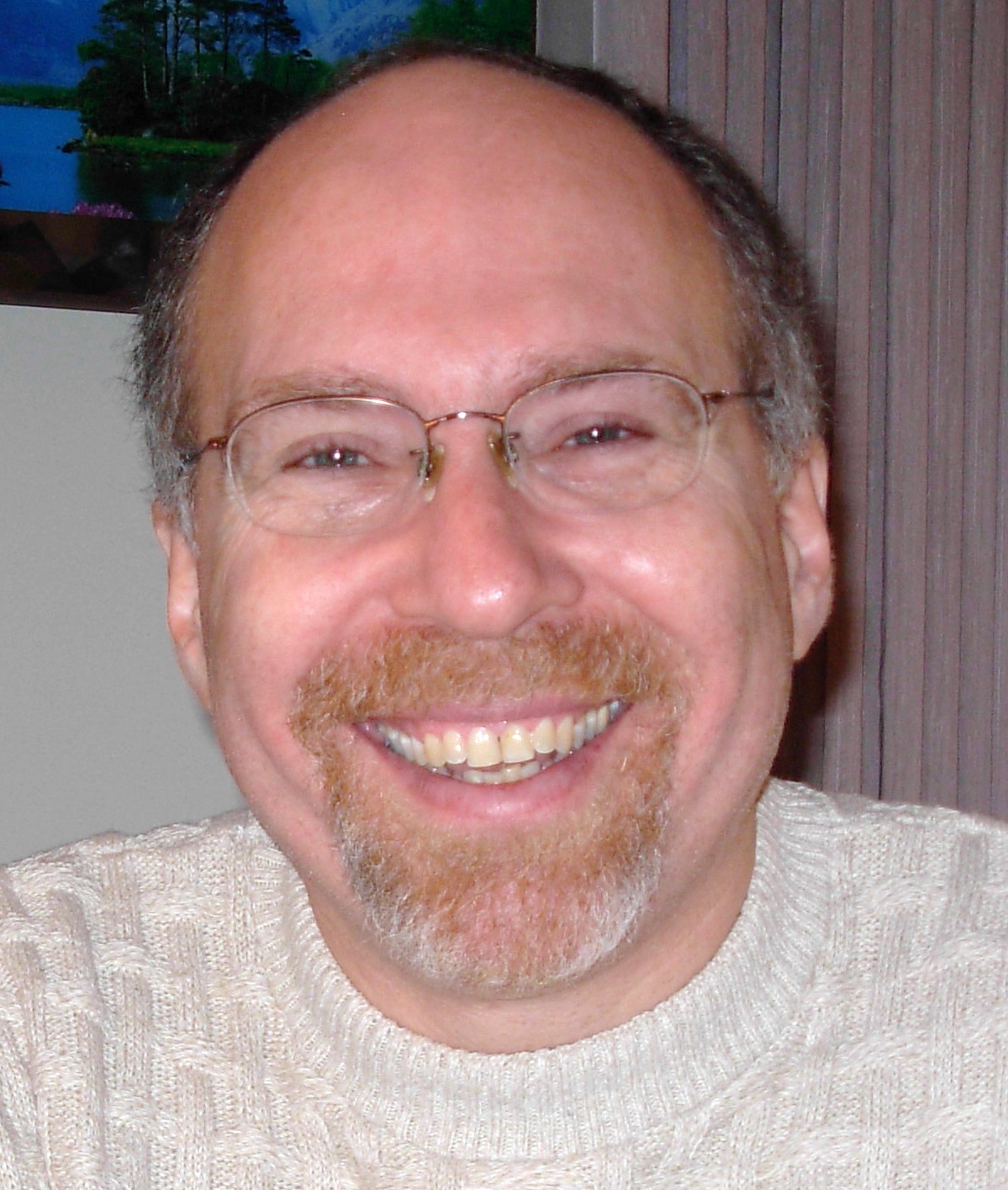 Rabbi Shawn Israel Zevit is the lead rabbi at congregation Mishkan Shalom, in Philadelphia, PA, committed to the integration of meaningful spiritual living, life-long learning and acts of caring and social justice. Rabbi Zevit worked for over thirty years consulting to and supporting dozens of congregations, organizations, social justice and sustainability initiatives in the Jewish and larger world. He is co-director with Rabbi Marcia Prager of the award-winning Davennen Leader’s Training Institute (www.dlti.org) and is a spiritual director and associate director for the ALEPH Hashpa’ah (Spiritual Direction) program. He is also a recording and performing artist (http://www.cdbaby.com/Artist/ShawnZevit) and has been an organizer for over twenty years of men’s programming and retreats. He is the co-editor with Harry Brod of Brother Keepers: New Perspectives in Jewish Masculinity (Men’s Studies Press, 2010). He is also the author of Offerings of the Heart: Money and Values in Faith Community (Alban Institute). Rabbi Zevit is a graduate of the Reconstructionist Rabbinical College and also has simcha from Rabbi Zalman Schachter-Shalomi z”l and ALEPH.
Vision | Shviti Shechinah L’Negdi Tamid– Striving to be conscious and acting on the Divine potential in all Life- always. This kavannah or guiding principle informs my longing and work as a human being, and thus in my rabbinic roles. I see my work at the nexus of spiritual formation, sustainable living, justice and healing on a personal, interpersonal and communal level. I am committed to helping the people I encounter and work with to awake to what is possible within themselves and in the world. I see “rabbi-ing” as being an active leader, catalyst and supporter in prayer, congregational management, teaching, counseling, organizing for justice and change, and meaningful and creative Jewish spiritual expression.
