God as Creator, Wisdom, Love, Mystery: Frameworks for approaching the Divine
Editor’s Note: This article appeared in eJewishPhilanthropy on January 9, 2026.
 “The God who is hidden” is the opening line of the famous piyyut “El Mistater,” a liturgical poem written in 1550 in Safed by Rabbi Avraham Maimin. It is a foundational prayer in many Sephardic communities. I grew up hearing this song as the opening for Baqqashot, a Sephardic musical ritual sung in synagogue on Shabbat during the winter months. To me, it was a call to reflect on the mysterious nature of God and to seek the Divine in life.
Over the years, however, as I immersed myself in various Jewish communities, I began to feel that God is often hidden in our synagogues. The word “God” can feel taboo, even charged. In many circles, we embrace community, law, and ritual — but God? Sometimes it seems to push people too far.
But what does it mean to build a religious life in which God is hidden? Is it even possible? For me, leading a Jewish life without God felt like an oxymoron. For most of Jewish history, God was at the center of religious life. Today, however, that center often feels empty or hidden.
When I first began teaching about God in Jewish communities, it felt risky. Would people accept me? Was I being too bold? But instead of resistance, I felt relief — so many were drawn to the work precisely because I spoke openly about the Divine.
During my time in the inaugural cohort of Abrahamic House, a social-change incubator that brings people of different faiths together, I experienced this even more vividly. Connecting with Christians, Muslims, and people of other traditions showed me that my Jewishness actually roots me more deeply in the Oneness of reality. From that place, interfaith connection felt not only possible, but natural.
Christians speak of God easily — “Glory to God,” “Praise the Lord.” Muslims proclaim “Allahu Akbar,” God is the greatest. So why is it that many Jews I encounter, particularly non-Orthodox Jews, so often hesitate to fully claim our God?
I developed a program called God Fellowship, a 12-week immersive journey that guides people in cultivating a personal relationship with God. Not an abstract idea of God, and not a patriarchal figure in the sky who judges or shames us. For many, those inherited images have created disconnection from life and a feeling of being controlled by others.
But the real God — a living, dynamic being — is inviting us into relationship.
Click here to continue reading.
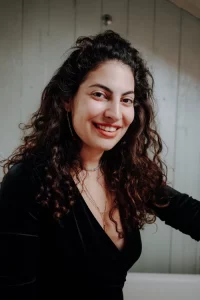
Hadar Cohen is an Arab Jewish scholar, mystic and artist whose work focuses on multi-religious spirituality, politics, social issues and community building. She is the founder of Malchut, a spiritual skill-building school. Hadar is a 10th-generation Jerusalemite with roots also in Syria, Kurdistan, Iraq and Iran.
